15 Easy Comfy Crochet Sock Patterns for Beginners
15 Easy Comfy Crochet Sock Patterns for Beginners
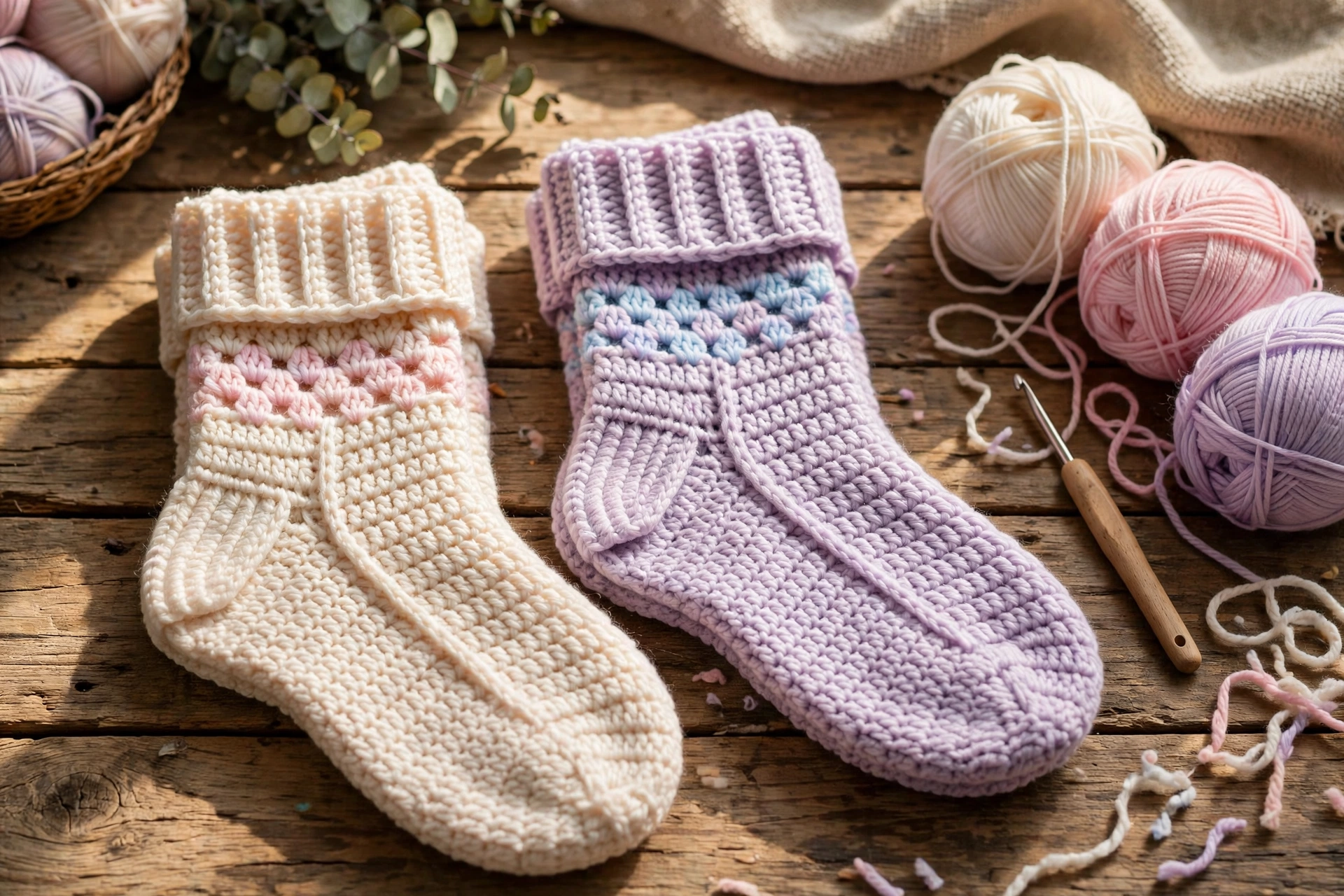
There is nothing cozier than sliding your feet into socks you made yourself. Warm, soft, and made to fit your feet — not some factory size.
Crochet socks have a scary reputation. People hear “heel turn” and run away. But the truth is simple: many easy patterns skip the hard heel work or walk you through it stitch by stitch. You only need basic stitches to make a comfy pair.
Below you will find 15 easy, comfy crochet sock patterns. Most are free to find online. Pick one that matches your skill level, grab soft yarn, and start stitching.
Before You Start: 5 Things Beginners Get Wrong
1. Crocheting too tightly. This is the number one sock killer. Tight stitches have no stretch, so your sock will not fit over your heel. Keep your tension relaxed. If your socks always come out stiff, go up one hook size.
2. Skipping the gauge swatch. A tiny test square tells you if your sock will fit. Crochet has less stretch than knitting, so size matters even more here. Measure your swatch and match the pattern’s gauge. Your feet will thank you.
3. Never trying the sock on. Unlike a blanket, you can test a sock as you go. Slide it on your foot every few rounds. Check the heel, the toe, and the cuff. Catching a fit problem early saves hours of rework.
4. Using the wrong yarn. Plain cotton or soft acrylic wears out fast on feet. Look for sock yarn with some nylon in it — about 20% nylon makes socks last much longer. Also check the label: machine-washable yarn saves you from hand-washing socks forever.
5. Fearing the heel. The heel looks hard, but it is just short rows and counting. Many beginner patterns use a simple square heel or skip tricky shaping. Follow one step at a time. If you are new, start with the easiest crochet stitches for beginners before you cast on. You can do this.
Easy Slipper & Lounge Sock Patterns
These are thick, cozy, and fast. Perfect first socks — and nobody sees fit mistakes under a blanket.
1. Two-Hour Chunky Slipper Socks
Thick yarn, big hook, done in one evening. Worked from the toe up with no heel turning at all. Best with bulky weight yarn and a 6.5 mm (K) hook. Best for: your very first pair — fast win, zero stress.
2. Simple Single Crochet Slipper Socks
One stitch — single crochet — for the whole sock. The ribbed cuff keeps them up. Best with worsted weight acrylic and a 5.5 mm (I) hook. Best for: practicing relaxed tension while making something useful.
3. Granny Stripe Bed Socks
Soft stripes in your favorite colors. The loose fit means no heel stress at all. Best with worsted weight soft acrylic and a 6.0 mm (J) hook. Best for: using up leftover yarn scraps.
4. Fold-Over Cuff Lounge Socks
A tall ribbed cuff that folds down. Extra warm around the ankles. Best with chunky yarn and a 6.5 mm hook. Best for: cold floors and winter mornings.
5. Textured Bobble Slipper Socks
Little bobbles on top for grip and cuteness. Still beginner-friendly — bobbles are just clustered stitches. Best with bulky yarn and a 6.0 mm hook. Best for: gifts that look fancy but are easy.
Classic Everyday Sock Patterns
Real socks you can wear in shoes. These teach you real sock skills: cuffs, heels, and toes.
6. Easy Toe-Up Beginner Socks
Start at the toe and work upward. Try it on as you go — the fit-as-you-go method beginners love. Best with DK weight sock yarn (with nylon) and a 4.0 mm (G) hook. Best for: learning real sock construction without fear.
7. Ribbed Cuff Everyday Socks
A stretchy ribbed cuff that actually stays up. Uses only single crochet and slip stitches. Best with fingering or DK sock yarn and a 3.5 mm (E) hook. Best for: socks that do not slide down.
8. No-Sew Heel Socks
The heel is worked in one piece — no sewing, no joining parts. A great confidence builder. Best with worsted weight yarn and a 5.0 mm (H) hook. Best for: anyone scared of the heel.
9. Simple Striped Crew Socks
Classic crew length with easy stripes. Teaches you clean color changes. Best with DK weight yarn in two colors and a 4.5 mm hook. Best for: practicing neat stripes.
10. Half Double Crochet Cozy Socks
Half double crochet works up faster than single crochet and makes a softer fabric. Best with worsted weight soft yarn and a 5.5 mm hook. Best for: a quick weekend pair.
Fun & Cozy Sock Patterns
Once the basics click, these add personality.
11. Lacy Summer Socks
Openwork lace that breathes. Lighter than it looks — the pattern repeats are simple. Best with fingering weight cotton blend and a 3.5 mm hook. Best for: spring weather and cute shoes.
12. Cable-Look Socks (No Cables Needed)
Front-post stitches fake a cable look with zero cable needle. Impressive but easy. Best with DK weight yarn and a 4.5 mm hook. Best for: looking advanced on your second pair.
13. Ankle Socks for Sneakers
Short and sweet. Less yarn, less time, perfect for trying sock-making. Best with sport weight sock yarn and a 3.75 mm hook. Best for: a low-commitment first try.
14. Fuzzy Winter Socks
Use fuzzy or brushed yarn for maximum coziness. The texture hides uneven stitches — great for beginners. Best with bulky fuzzy yarn and a 6.5 mm hook. Best for: the softest socks you will ever own.
15. Gift-Ready Sock Set
Make three short pairs in matching colors. Small projects, big gift impact. Best with DK weight machine-washable yarn and a 4.0 mm hook. Best for: holiday gifts on a budget.
Sock Sizing Cheat Sheet
Measure your foot from heel to big toe, then check this table:
| US women’s shoe | Foot length | Finished sock foot length* |
|---|---|---|
| 5–6 | 8.5″ (21.5 cm) | 8″ (20 cm) |
| 7–8 | 9.25″ (23.5 cm) | 8.75″ (22 cm) |
| 9–10 | 10″ (25.5 cm) | 9.5″ (24 cm) |
| 11–12 | 10.75″ (27.5 cm) | 10.25″ (26 cm) |
*Make the foot about 0.5″ shorter than your actual foot. Crochet stretches a little with wear, and a slightly snug sock stays on better.
For the cuff: measure around your ankle. Your starting chain should stretch to fit snugly around it — not hang loose, not strangle. When in doubt, size up for thick lounge socks and size down for thin everyday socks.
Common Sock Problems (and Fixes)
I can’t get the sock over my heel. Your stitches are too tight, or the ankle opening is too small. Frog back to the cuff and add more stitches, or remake with a bigger hook. Trying the sock on as you go prevents this.
The heel looks weird and lumpy. Totally normal for a first heel. Count your stitches every row during the heel turn. Short-row heels get smoother with practice. A lumpy heel still keeps feet warm.
One sock is bigger than the other. Your tension changed between socks — very common. Work both socks at the same time (a few rounds on each, alternating), or measure the first sock and match it round by round.
The cuff slides down. Add more ribbing rounds, or work the cuff with a smaller hook for extra grip. A ribbed cuff made with back-loop-only stitches hugs the leg much better than a plain cuff.
My socks wore out in a month. Feet are rough on yarn. Use sock yarn with nylon (around 20%) for durability. Plain cotton and soft acrylic pill and thin out fast on soles.
My socks are too thick for my shoes. Crochet uses more yarn than knitting, so crochet socks run thick. Wear thick pairs as slipper or lounge socks. For shoe socks, use fingering or sock-weight yarn with a small hook.
Should I block my socks? A light block evens out stitches, but it is optional. Never aggressively stretch socks when blocking — you will ruin the fit you worked for.
FAQ
What is the easiest crochet sock pattern for beginners?
A chunky slipper sock with no heel shaping. Thick yarn and a big hook mean fast results, and the loose fit forgives mistakes. Move to toe-up socks when you want a real fitted pair.
What yarn is best for crochet socks?
Sock yarn with about 20% nylon. The nylon adds strength so the soles do not wear through. Make sure it is machine washable unless you enjoy hand-washing socks.
Why are my crochet socks so tight?
Tight tension is the usual cause. Relax your hands and try a larger hook. Also try the sock on as you go — crochet stretches less than knitting, so you cannot rely on stretch to save a small sock.
How do I make crochet socks not slide down?
Work a proper ribbed cuff and make it snug. Back-loop-only ribbing grips well. If the leg is too loose, go down a hook size for the cuff section only.
Can I wear crochet socks in shoes?
Yes, if you use thin sock-weight yarn and a small hook. Thick worsted or bulky socks are better as house socks — they will make your shoes feel two sizes smaller.
How long does it take to crochet a pair of socks?
Chunky slipper socks: one evening. A basic worsted pair: a weekend. Thin fingering-weight socks: one to two weeks of evening stitching. Your second pair always goes faster.
Start Your Socks Today
Pick a chunky slipper pattern, grab soft yarn with some nylon in it, and cast on. Try the sock on as you go, do not fear the heel, and enjoy every stitch. Happy crocheting!