
Free Crochet Stocking Patterns: 15 Easy Ideas
Free Crochet Stocking Patterns: 15 Easy Ideas
Nothing says Christmas quite like a handmade stocking on the mantel. A crochet stocking is warm, personal, and fun to make. It also makes a lovely gift that people keep for years.
If you have never made a stocking before, do not worry. Many free patterns are simple. You only need basic stitches, a little yarn, and some patience. This guide shares 15 easy ideas and answers the questions beginners ask most.
Why Crochet Your Own Stockings?
Shop stockings all look the same. A crochet stocking does not. You can pick the colours, the size, and the style. Make one to match your tree, or make a set for the whole family.
Stockings are also a great way to use leftover yarn. Small stockings use very little yarn. Big stockings work up fast with chunky yarn.
Before You Start: Pick the Right Size
Think about what the stocking is for. This one choice shapes the whole project.
- **Full-size stockings** hold small gifts and treats. They are best in worsted or bulky yarn.
- **Mini stockings** are perfect tree ornaments, gift tags, or money holders. They use little yarn and finish fast.
- **Baby’s first Christmas stockings** are small and soft. Keep decorations flat and safe, and hang them out of reach.
Check the finished size in the pattern before you start. A stocking that looks big in a photo may be a tiny ornament in real life.
15 Free Crochet Stocking Patterns to Try
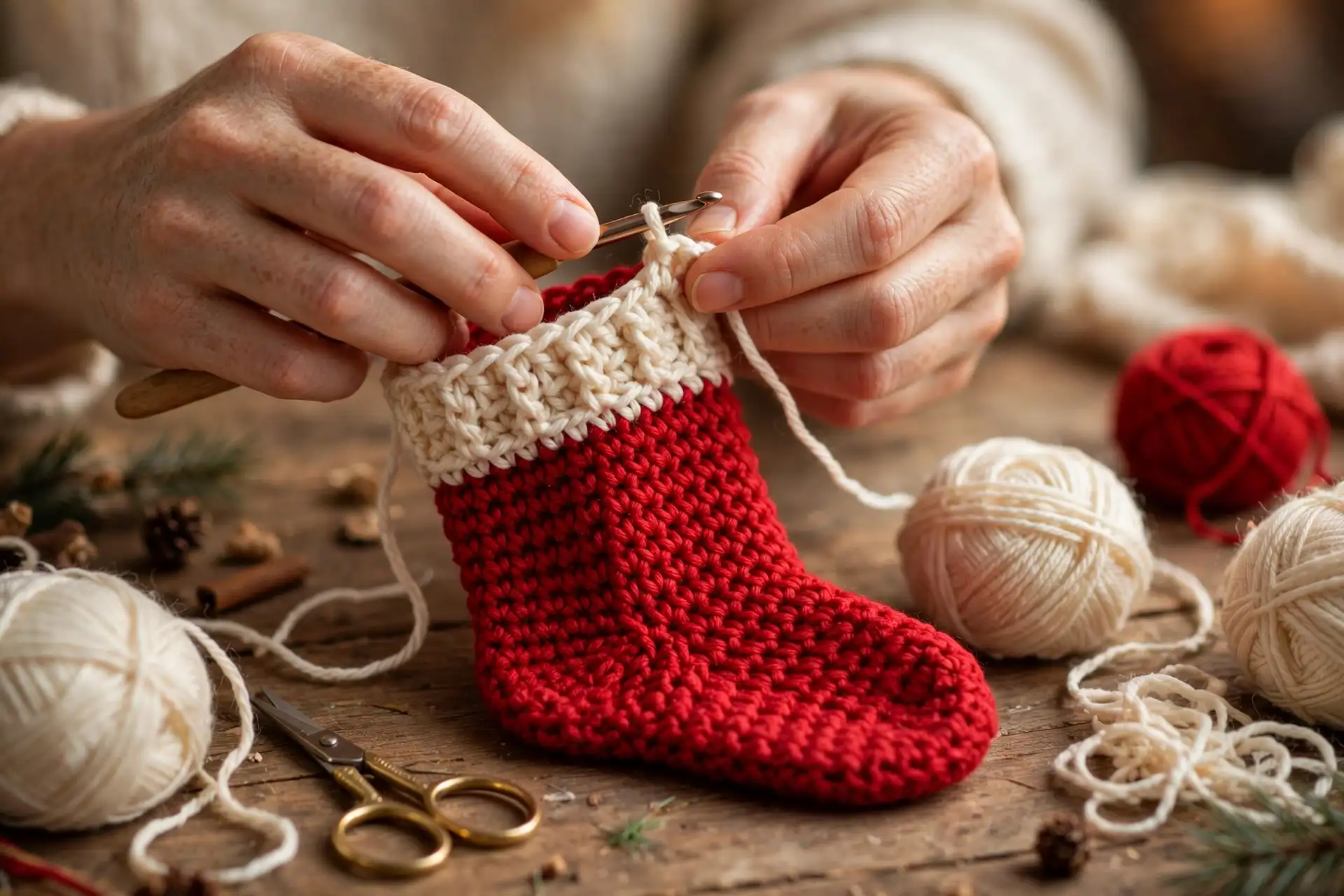
1. Classic Red and White Stocking
This is the stocking most people picture at Christmas. Red body, white fluffy cuff, and a simple shape. It suits any home.
2. Chunky No-Sew Stocking
Do you hate sewing pieces together? Try a no-sew stocking. It is worked in one piece with bulky yarn, so it grows fast. It is a great choice if you want a big stocking in a weekend.
3. Mini Stocking Ornaments
Mini stockings are small, quick, and sweet. Make a whole set for the tree in different colours. They also make cute gift toppers.
4. Granny Stitch Stocking
Granny stitch gives a soft, textured look. It is easy to learn, and it works well in stripes. Use two or three colours for a classic feel.
5. Striped Family Stockings
Make the same pattern in different colours for each person. Add a name tag or a different cuff colour so everyone knows which stocking is theirs.
6. Elf Stocking With a Pointed Cuff
An elf-style cuff gives a playful twist. The pointed cuff and striped heel and toe look modern and fun. This style is popular in 2026 Christmas roundups.
7. Santa Face Stocking
A Santa face stocking is a sweet keepsake, especially for a baby’s first Christmas. Keep it as a decoration, not a toy, and hang it safely away from heat.
8. Rustic Farmhouse Stocking
Use cream, grey, and soft red yarn for a calm farmhouse look. Simple stitches and natural colours fit well in a cosy living room.
9. Textured Bobble Stocking
Bobbles and puff stitches add grip and charm. They also hide small mistakes, which makes them kind to beginners.
10. Simple Beginner Stocking
Look for a pattern that uses only single crochet and double crochet. Start at the toe, work up the foot, shape the heel, then finish the leg and cuff. One simple pattern teaches you the whole shape.
11. Quick Last-Minute Stocking
Short on time? Pick a bulky yarn pattern with a large hook. Fewer stitches mean a faster finish, and the stocking still looks full and festive.
12. Stocking With a Ribbed Cuff
A ribbed cuff stretches a little, so it sits nicely at the top. Work the cuff in back-loop stitches for a neat ribbed effect.
13. Scrap Yarn Stocking
Use up small balls of yarn in stripes. Change colour every few rounds. No two stockings will look the same, and that is part of the charm.
14. Personalised Stocking for Kids
Let each child pick their colours. Add an initial, a star, or a small applique. Kids love seeing a stocking made just for them.
15. Heirloom Stocking to Keep
Pick good yarn, weave in your ends well, and make a strong hanging loop. A well-made stocking can come out every December for many years.
How a Crochet Stocking Is Shaped
Most stockings follow the same simple path:
- **Toe:** Start with a small circle and grow it round by round.
- **Foot:** Work straight rounds until the foot is long enough.
- **Heel:** Work back and forth in rows, then fold and join to form the heel bend.
- **Leg:** Work rounds up from the heel to the top.
- **Cuff:** Add a cuff in a contrast colour, often with ribbing or fluffy yarn.
- **Loop:** Add a strong hanging loop at the back of the cuff.
Once you learn this shape, most stocking patterns feel much easier.
Beginner Tips That Save Frustration
The heel feels hard, but it is just rows. The heel is the part beginners fear most. In truth, it is short rows worked back and forth, then folded. Read that section twice before you start, and use a stitch marker to mark the heel edges.
Count your stitches after the heel. Many stockings go wrong right after the heel join. Count once, and your leg will stay even.
Do not make the cuff too tight. A tight cuff will not stretch over the leg, and it can pull the top in. If your cuff feels tight, go up a hook size for the cuff rounds.
Check the size as you go. Lay the stocking flat and measure it. It is much easier to add or remove a few rounds now than to fix a finished stocking.
Make the hanging loop strong. Spread the loop stitches over a small area, not just one stitch. Hang filled stockings only from a sturdy hook, away from heat and out of reach of small children.
Use a stitch marker. When you work in rounds without joining, it is easy to lose your place. A marker at the start of each round solves this.
What Yarn and Hook Should You Use?
- **Worsted weight yarn** with a 5 mm or 5.5 mm hook gives a classic, sturdy stocking.
- **Bulky or chunky yarn** with a 6 mm to 8 mm hook gives a big, soft stocking fast.
- **DK yarn** with a smaller hook is better for mini ornaments and fine detail.
Always check what the pattern suggests first. Changing yarn weight changes the size, even if you follow the same stitch counts.
How to Care for Crochet Stockings
Hand wash gently in cool water and lay flat to dry. This keeps the shape and stops the cuff from stretching. Store stockings flat in a clean, dry place after Christmas. Do not pile heavy decorations on top of fluffy cuffs or pom-poms.
Frequently Asked Questions
Are crochet stockings hard for beginners?
No. A simple stocking uses basic stitches. The heel is the trickiest part, but it is short and easy once you try it. Start with a beginner or no-sew pattern.
How long does a crochet stocking take?
A mini stocking can take under an hour. A full-size stocking in worsted yarn may take a few evenings. A chunky stocking works up faster, often in a weekend.
Why does my stocking twist when it hangs?
The loop may sit too far forward. Move it slightly toward the heel side, and spread its stitches over a few stitches. This helps the stocking hang straight.
Why is my stocking too small?
You may be using thinner yarn or a smaller hook than the pattern. Check the finished size first, and test your gauge. To make a bigger stocking, use thicker yarn or add rounds to the foot and leg.
Can I crochet a stocking with no sewing?
Yes. Many no-sew patterns are worked in one piece. They are a great choice if you dislike joining parts.
What is the best yarn for a Christmas stocking?
Worsted yarn is a safe all-round choice. Bulky yarn is best for a fast, chunky stocking. For ornaments, use DK or worsted yarn with a small hook.
Final Thoughts
A crochet stocking is a small project with a big Christmas feeling. Pick a size, pick colours you love, and start with a simple pattern. Your first stocking may not be perfect, and that is fine. It will still look handmade in the best way, and it will mean more than any shop stocking.
Happy crocheting, and happy holidays!