15 Free Crochet Coaster Patterns That Actually Stay Flat
15 Free Crochet Coaster Patterns That Actually Stay Flat
Crochet coasters are the perfect quick project. They use little yarn, they take under an hour, and they make great gifts.
But here is the problem most beginners hit: the coaster curls up like a little bowl. Or it comes out floppy. Or it looks flat until a hot mug lands on it and it warps.
This guide fixes all of that. You get 15 free crochet coaster patterns below, plus the yarn picks, sizing tips, and stiffening tricks that make coasters actually work on a real coffee table.
Before You Start: The 4 Rules of Good Coasters
These four rules fix 90% of coaster problems.
1. Use 100% cotton yarn. Cotton absorbs condensation. Acrylic does not — water just sits on top. Cotton also handles heat from hot mugs better. Good picks: Lily Sugar’n Cream, Dishie, or 24/7 Cotton.
2. Aim for 4 inches across. That is the sweet spot for most mugs. 3.5 inches works for small cups. 5 inches fits big oversized mugs.
3. Keep stitches dense and flat. Loose, lacy stitches let cups wobble. Tight single crochet and half double crochet give you a solid, stable surface.
4. Go up a hook size if it curls. Curling is almost always tight tension. A hook one size bigger than the yarn label says will relax the stitches and keep the circle flat.
Easy Patterns for Beginners
1. The Classic Round Coaster
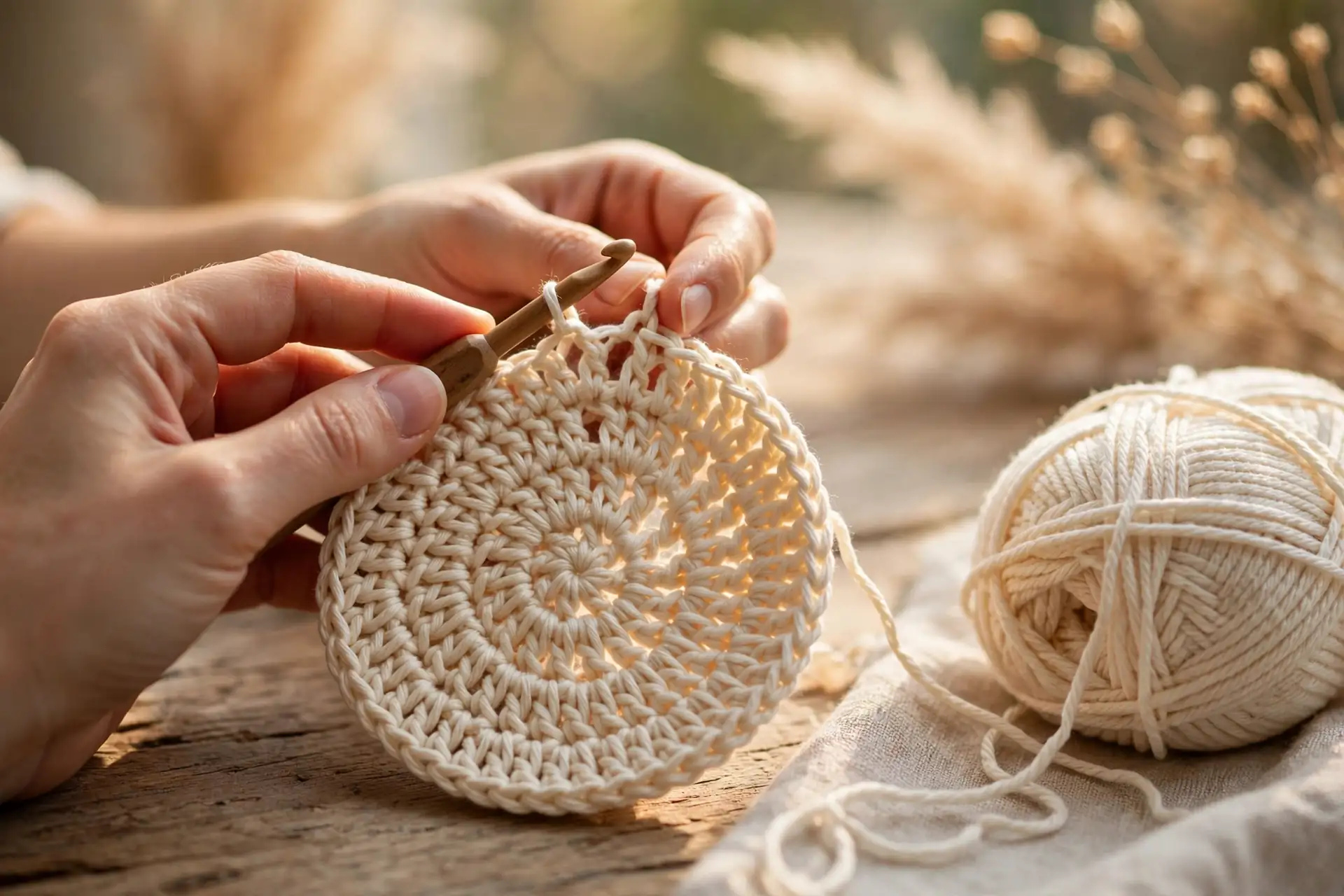
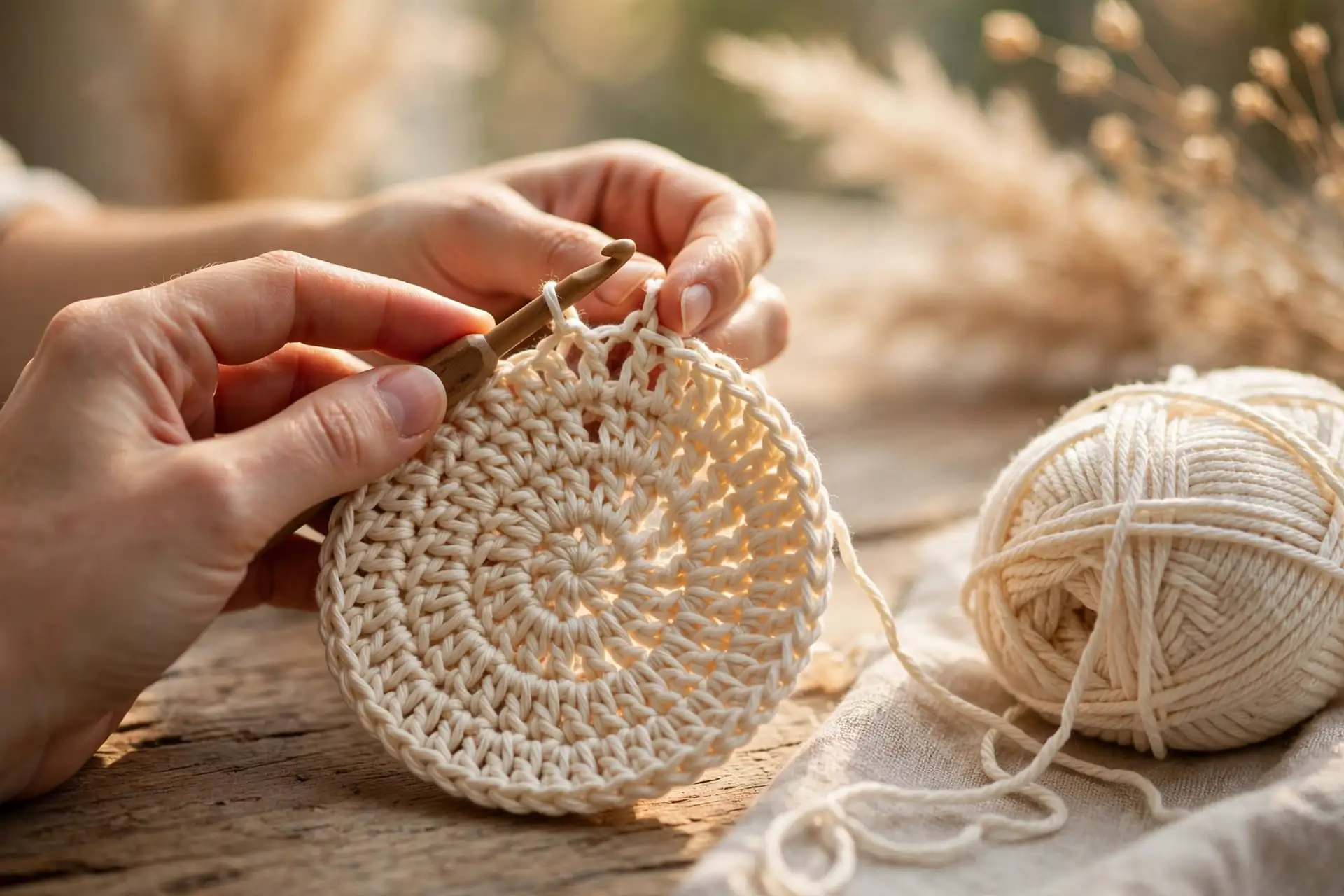
The simplest coaster there is. Chain 4, join into a ring, and work single crochet rounds with steady increases. No magic ring needed — the chain-4 start works fine. Takes about 20 minutes.
2. Double-Thick Coaster
Make two thin circles and stitch them together with a whipstitch around the edge. This is the fix for flimsy coasters. The double layer feels sturdy and soaks up more.
3. Half Double Crochet Circle
Work the whole coaster in half double crochet. It grows faster than single crochet and still lies flat. Great first project if you just learned the stitch.
4. The No-Sew One-Piece Coaster
Start with a chain-4 ring and work outward in one piece. Nothing to sew, nothing to attach. Finish with a slip stitch and weave in one tail. Done.
5. Easy Granny Square Coaster
Work a small granny square — just two or three rounds. Square coasters look great on modern tables and the corners stay flat because of the chain spaces.
6. Shell Stitch Coaster
Shells add a pretty edge without making the coaster lacy. Keep the center solid and put the shells only on the last round so cups still sit steady.
Pretty Patterns for Gifting
7. Flower Coaster
A simple 6-petal flower in two colors. Work the center in one color and the petals in another. These look adorable in a set of four tied with ribbon.
8. Mandala Coaster
A small mandala with 3–4 color changes. It looks fancy but it is just rounds of double crochet with different colors. Perfect for using up scrap yarn.
9. Hexagon Coaster
Six sides, no curling. The hexagon shape naturally lies flat, which makes it a great pick if round coasters keep cupping on you.
10. Heart Coaster
A sweet heart shape for Valentine’s Day or just because. Works up in under 30 minutes and makes a lovely little gift.
11. Fruit Slice Coasters
Watermelon, lemon, and orange slices — white rind round, colored center, a few black stitches for seeds. Fun, bright, and kids love them.
12. Farmhouse Boho Coaster
Cream cotton with a fringe edge or a simple bobble round. Matches rustic and farmhouse decor. Keep the fringe short so mugs sit level.
Coasters With a Job to Do
13. The Mug Rug
Bigger than a coaster — about 6 by 4 inches. Fits a mug plus a cookie. Great for desks and nightstands.
14. Bobble Texture Coaster
Bobbles on the bottom side grip the table a little. Keep the top smooth so the cup sits flat. A nice middle ground between pretty and practical.
15. Scrap Yarn Stripe Coaster
Use up leftover yarn. Change color every round. Stripes hide small tension mistakes, which makes this a forgiving pattern for beginners.
Troubleshooting: Why Your Coasters Fail (and How to Fix Them)
My coaster curls into a bowl. Your tension is too tight or you need more increases. First try a bigger hook. If the edge still pulls up, add a few extra stitches in the next round.
My circle is wavy and ruffled. You have too many increases for your tension. Frog back one round and redo it with fewer stitches, or drop down a hook size.
My coaster is floppy. The yarn is too soft or the stitches too loose. Make a double-thick version (pattern 2 above), or stiffen it — see below.
My coaster slides on the table. Sew a small square of non-slip shelf liner or silicone backing to the bottom. It takes two minutes and stops the sliding completely.
My cup wobbles. The stitches are too textured or the center is bumpy. Use flatter stitches for the middle rounds and save texture for the edge.
Water pools on top instead of soaking in. That is acrylic yarn. Switch to 100% cotton and the problem disappears.
How to Make Coasters Stiff and Flat
Pick one of these — you do not need all three.
Blocking. Wet the coaster, pin it flat on a towel, and let it dry. This alone fixes mild curling. Re-block after washing if it cups again.
Starch. Mix cornstarch with water, dip the coaster, squeeze out the extra, and dry it flat. It gives a crisp finish. You will need to redo it after washing.
Double layer. Crochet two coasters and join them. No chemicals, survives the wash, and feels the most professional.
Washing Your Coasters
Cotton coasters are machine washable. Use cold water and a gentle cycle. Reshape them while damp and dry them flat — do not hang them, or they will stretch. If one loses its shape, just re-block it.
FAQ
What is the best yarn for crochet coasters?
100% cotton, worsted weight. It absorbs water, handles heat, and holds its shape. Lily Sugar’n Cream and Dishie are popular picks.
Can I use acrylic yarn for coasters?
You can, but cotton works much better. Acrylic does not absorb condensation, and it can react badly to very hot mugs.
What size should a crochet coaster be?
About 4 inches across for a standard mug. Go 3.5 inches for small cups and 5 inches for oversized mugs.
Why do my crochet coasters curl up?
Tight tension is the usual cause. Use a hook one size larger than the yarn label suggests, and make sure your increase rounds are even.
How do I keep coasters from getting floppy?
Crochet tightly, use cotton yarn, and consider a double-thick design. Starch or blocking adds extra stiffness.
Do I need a magic ring to start a coaster?
No. Chain 4 and join with a slip stitch to form a ring. It works just as well for coasters.
Can crochet coasters go in the washing machine?
Yes, if they are cotton. Wash cold and gentle, reshape while damp, and dry flat.
How long does it take to crochet a coaster?
Most simple coasters take 20 to 45 minutes. A set of four is a nice evening project.
Coasters are small, but the details matter — cotton yarn, flat stitches, and the right size. Pick a pattern above, grab your hook, and make a set this weekend. Your coffee table will thank you.