
Free Crochet Reindeer Patterns
Introduction
A crochet reindeer is one of the sweetest Christmas projects you can make. With brown yarn, two antlers, and a red nose, a few simple shapes turn into Rudolph himself.
The good news is that you do not need to be an expert. Many free crochet reindeer patterns use only basic stitches. You make round shapes, add ears and antlers, and then you add a simple face. That is it.
In this guide, you will find the best types of free reindeer patterns, how to pick the right one for your skill level, and easy fixes for the problems beginners meet most often — especially droopy antlers.
Why Crochet Reindeer Are So Popular
Reindeer are popular because they look festive at once. A brown ball with antlers reads as Christmas, even before you add the red nose.
They are also flexible. A tiny reindeer works as a tree ornament. A soft amigurumi reindeer works as a gift for a child. A flat reindeer applique can decorate a hat, a stocking, or a sweater.
Reindeer suit every style. You can make a classic Rudolph with a bright red nose, a soft pastel reindeer, or a whole reindeer family in different sizes. Change the scarf colour, and you get a whole new character.
Types of Free Crochet Reindeer Patterns
1. Reindeer ornaments
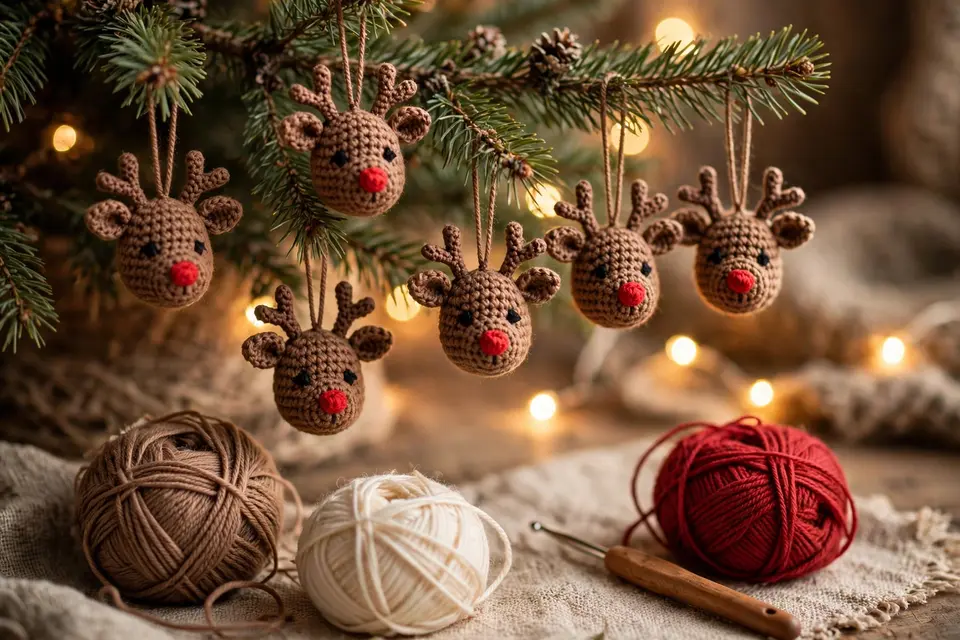
These are small reindeer made to hang on a Christmas tree. They are light, quick, and great for using up leftover brown yarn.
Pick an ornament pattern if you want a fast win, or if you want to make a set for gifts. Keep the parts sewn on firmly, and add a strong hanging loop at the top.
2. Reindeer amigurumi
Amigurumi reindeer are soft, stuffed toys. They sit on a shelf, a mantelpiece, or a child’s bed.
These patterns take a little longer, but they are still beginner-friendly. You work in rounds, stuff as you go, and then sew the head to the body. A chunky yarn makes a big, huggable reindeer. A thinner yarn makes a smaller, neater one.
3. Reindeer appliques
An applique is a flat reindeer you sew onto something else. You can add it to a hat, a blanket, a stocking, or a gift bag.
Appliques are a good choice if you are new to crochet. The shapes are flat, the stitches are simple, and you can finish one in one sitting. Some clever appliques are even built from a heart shape.
4. Reindeer hats and scarves
Reindeer faces also work well on wearable items. Think a reindeer hat with antlers for a child, a reindeer scarf, or a reindeer cup cosy for hot drinks.
These projects are practical. They get used every day through winter, not just on Christmas Day.
5. Reindeer blankets and granny squares
If you love bigger projects, try a reindeer granny square blanket. You make one square at a time, then join them together.
This is a lovely slow project for winter evenings. You can also make just one square and turn it into a cushion cover.
How to Choose the Right Pattern
Ask yourself three quick questions before you start:
- How much time do I have? Pick an ornament or applique for a quick project. Pick amigurumi for a weekend project.
- Who is it for? For a small child, embroider the eyes instead of using safety eyes. For tree decor, keep it light and small.
- What yarn do I already have? Brown yarn is the main need. Then you need only small amounts of cream, dark brown, black, and red for the details.
If a pattern looks too long or uses stitches you do not know yet, save it for later. Start with a simple one first. A finished reindeer feels much better than a half-finished hard project.
Beginner Tips for a Neat Reindeer
Make the antlers with a smaller hook
This is the top tip for reindeer. Work the antlers one hook size smaller than the body so the fabric is dense and firm. Loose antlers flop, and firm antlers stand up.
Stuff the antlers lightly, all the way to the tip
Empty antler tips bend. Add a small amount of stuffing right to the end of each branch. For antlers taller than about six inches, thread a pipe cleaner or floral wire through the middle for extra support.
Sew the antlers on at a slight outward angle
Antlers sewn straight up can look stiff, and they droop more easily under their own weight. Angle them slightly outward. They read better, and they stay upright longer.
Use smooth yarn for the face
Fuzzy or halo yarns hide the shaping you worked so hard on, especially around the face. Use a smooth worsted-weight yarn in two shades of brown for a crisp face. Save fluffy yarn for the body of a big plush reindeer, if you use it at all.
Pin the face before you sew it
Wonky faces happen when parts are sewn on too fast. Pin the eyes, muzzle, nose, ears, and antlers in place first. Step back and look. Move anything that looks uneven, then sew.
Place safety eyes before you close the head
Safety eyes lock from the inside. Once the head is closed, you cannot move them. Put them in early, check the spacing, and only then finish the head.
Count your stitches at the end of every round
Losing count is the most common beginner mistake. Use a stitch marker in the first stitch of each round. Move it up every round. It takes seconds, and it saves you from unravelling later.
Support a floppy head
If the head flops forward, the neck needs more stuffing. Add stuffing to the neck area and pull the joining stitches a little tighter. For a tall reindeer, a firm neck makes all the difference.
A Simple Reindeer You Can Make
Here is a simple plan you can follow with any basic reindeer pattern:
- Make the body in brown yarn. Work in rounds, increase to make a ball, then decrease to close it.
- Make a smaller ball for the head in the same way.
- Sew the head to the body. Stuff the neck well so the head sits straight.
- Make a small cream oval for the muzzle. Sew it to the lower half of the face.
- Add a red nose. Use a small crocheted ball, a pom-pom, or red yarn embroidery.
- Add black eyes. Use safety eyes for decor, or embroider eyes for a child-safe toy.
- Make two ears in brown yarn. Sew them to the sides of the head.
- Make two antlers in dark brown yarn, with one or two small branches each. Sew them on at a slight outward angle.
- Crochet a simple scarf. Chain a row, work rows of half double crochet, and tie or sew it around the neck.
You can change this plan in many ways. Try a green scarf, a pair of tiny bells, or a reindeer with a smiling face. Small changes make each reindeer feel personal.
Yarn and Hook Ideas
- Worsted weight yarn is a good all-round choice. It is easy to find and easy to see.
- DK yarn gives finer detail. It works well for ornaments and mini reindeer.
- Chunky or blanket yarn makes a big, soft reindeer fast. Use a larger hook with it.
- A 3.5 mm to 5 mm hook suits most reindeer patterns, depending on your yarn. Check the pattern, then go down a hook size if your stitches look loose.
You do not need expensive yarn for a reindeer. Scrap yarn works well for the muzzle, nose, ears, antlers, and scarf.
Caring for Your Crochet Reindeer
Spot clean your reindeer with a damp cloth and mild soap. Let it air dry. Do not put it in a dryer, as heat can flatten the stuffing and the antlers.
Store it in a box with tissue paper after Christmas. Keep the antlers in place so they do not get bent. Check loops and sewn parts before you hang it again next year, and fix anything loose first.
You May Also Like
Frequently Asked Questions
Are free crochet reindeer patterns good for beginners?
Yes. Plenty of reindeer patterns are written for people who crochet only sometimes. Start with a mini reindeer, an ornament, or an applique. Save a large standing reindeer or a graph blanket for after you have finished a smaller one.
Why do my reindeer antlers droop?
This is the most common reindeer problem. Work the antlers with a smaller hook, stuff them lightly all the way to the tip, and add a pipe cleaner or wire inside tall antlers. Then sew them on at a slight outward angle instead of straight up.
What yarn should I use for a crochet reindeer?
Smooth worsted-weight acrylic in two shades of brown is the standard choice. It gives crisp stitch definition and holds a stuffed shape. Drop to DK yarn for ornaments and minis, and switch to chenille or blanket yarn only for big, soft plush reindeer.
Can I make a reindeer safe for a baby?
Yes, but skip safety eyes and small buttons. Embroider the eyes and nose instead, and sew every part on very firmly. Keep ornaments with hanging loops out of a baby’s reach, as they are decor, not toys.
How long does a crochet reindeer take?
A small ornament can take under an hour, and some minis finish inside an evening. A medium amigurumi reindeer often takes a few hours spread over a weekend. A blanket takes much longer, as it is made of many squares.
Can I use a different yarn weight?
Yes, but the size will change. Thicker yarn makes a bigger reindeer, and thinner yarn makes a smaller one. Change your hook size to match the yarn, and keep your stitches tight so the stuffing stays hidden.
Final Thoughts
Free crochet reindeer patterns are a joyful way to start your Christmas making. They are simple, quick, and full of character.
Pick one pattern, gather your brown yarn, and make your first reindeer this week. Once you finish one, you will want to make a whole reindeer family for your tree, your mantelpiece, and your friends.