15 Free Corner to Corner Crochet Blanket Patterns You’ll Love
Corner to corner crochet — or C2C — looks fancy, but it is one of the easiest ways to make a blanket. You start in one corner, grow a triangle, then shrink it back down into a square. That is the whole trick.
C2C blankets work up fast. You do not need a super long starting chain. The diagonal blocks hide small mistakes well. And color changes are simple — just switch yarn at the start of a new block.
Below you will find 15 free corner to corner crochet blanket patterns. There are easy beginner throws, sweet baby blankets, and fun picture blankets called graphgans. Pick one, grab your yarn, and start in the corner.
What Is Corner to Corner Crochet?
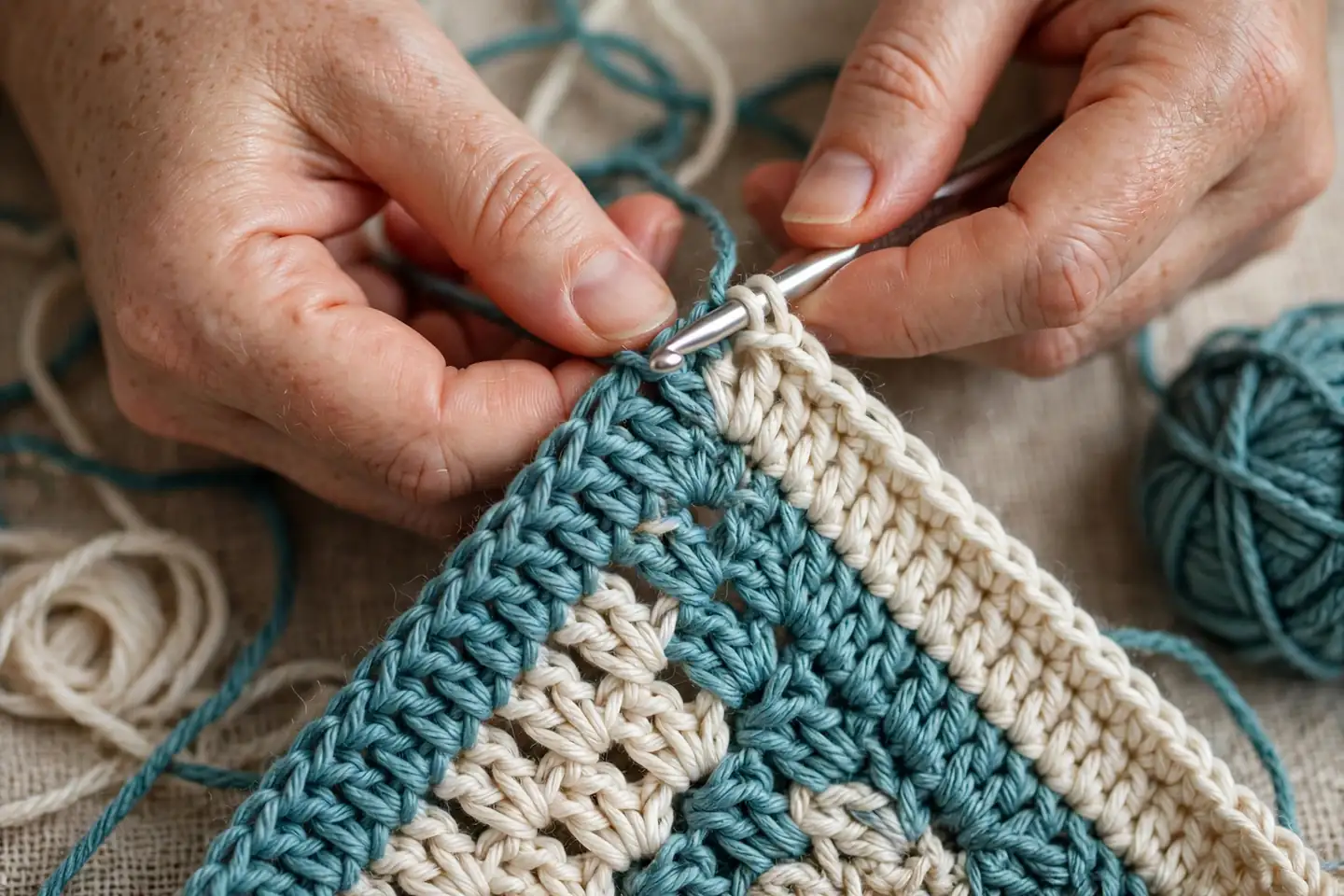
C2C means you crochet small blocks — usually chain 3 plus 3 double crochet — and join them into diagonal rows. Each row grows by one block until the blanket is as wide as you want. Then you decrease one block per row until you reach the opposite corner.
You only need three skills: chain, double crochet, and slip stitch. If you can do those, you can do C2C. New to the basics? Start with the easiest crochet stitches for beginners first.
Before You Start: 5 Things Beginners Get Wrong
1. Crocheting too tightly. Tight stitches make the edges curl up like a taco. C2C needs relaxed tension so the blocks lie flat. If your work curls, go up one hook size. Let the yarn flow through your fingers.
2. Not knowing when to decrease. This confuses everyone at first. You increase until one side of your triangle equals the width you want. Then you decrease every row. The triangle turns into a square. Measure the long side — when it matches your target width, start decreasing.
3. Losing count of blocks. Each diagonal row has one more block than the last. Count your blocks at the end of every row. A stitch marker in the first block of each row saves you from ripping back later.
4. Running out of yarn. C2C eats more yarn than you think because of the diagonal construction. Buy all your yarn at the start, and check the dye lots match. For a baby blanket you need about 1,000–1,500 yards of worsted weight. For a throw, plan 2,000–2,500 yards.
5. Dreading the loose ends. Color changes leave tails everywhere. Weave each end in as you go — do not save them all for the end. A yarn needle and five minutes per color change keeps the finishing painless. Striped C2C patterns are perfect for using up leftover yarn scraps.
Easy Beginner C2C Blankets
Simple stitches, no color charts. Learn the technique here.
1. Simple Striped C2C Throw
The classic first C2C project. Work in stripes of two or three colors and watch the triangle grow. Best with worsted weight acrylic and a 5.5 mm (I) hook. Best for: learning increases and decreases with zero stress.
2. One-Color C2C Baby Blanket
One solid color, one stitch pattern, done. The diagonal texture is pretty enough on its own. Best with soft DK weight yarn and a 5.0 mm (H) hook. Best for: a baby shower gift in a weekend.
3. Quick Weekend C2C Lap Blanket
A smaller size that finishes fast. Great practice before you commit to a big blanket. Best with bulky weight yarn and a 6.5 mm (K) hook. Best for: a fast win and a cozy couch blanket.
4. C2C Washcloth and Dishcloth Set
Tiny C2C squares make perfect washcloths. You learn the full increase-decrease cycle in under an hour. Best with cotton yarn and a 5.0 mm hook. Best for: testing the technique before a blanket.
5. Beginner C2C Scarf
A long, narrow C2C piece teaches you rectangle shaping — increase to a width, work even, then decrease. Best with worsted weight wool blend and a 5.5 mm hook. Best for: learning C2C rectangles, not just squares.
Sweet C2C Baby Blankets
Soft yarn, gentle colors, and sizes that finish before the baby arrives.
6. Pastel Rainbow C2C Baby Blanket
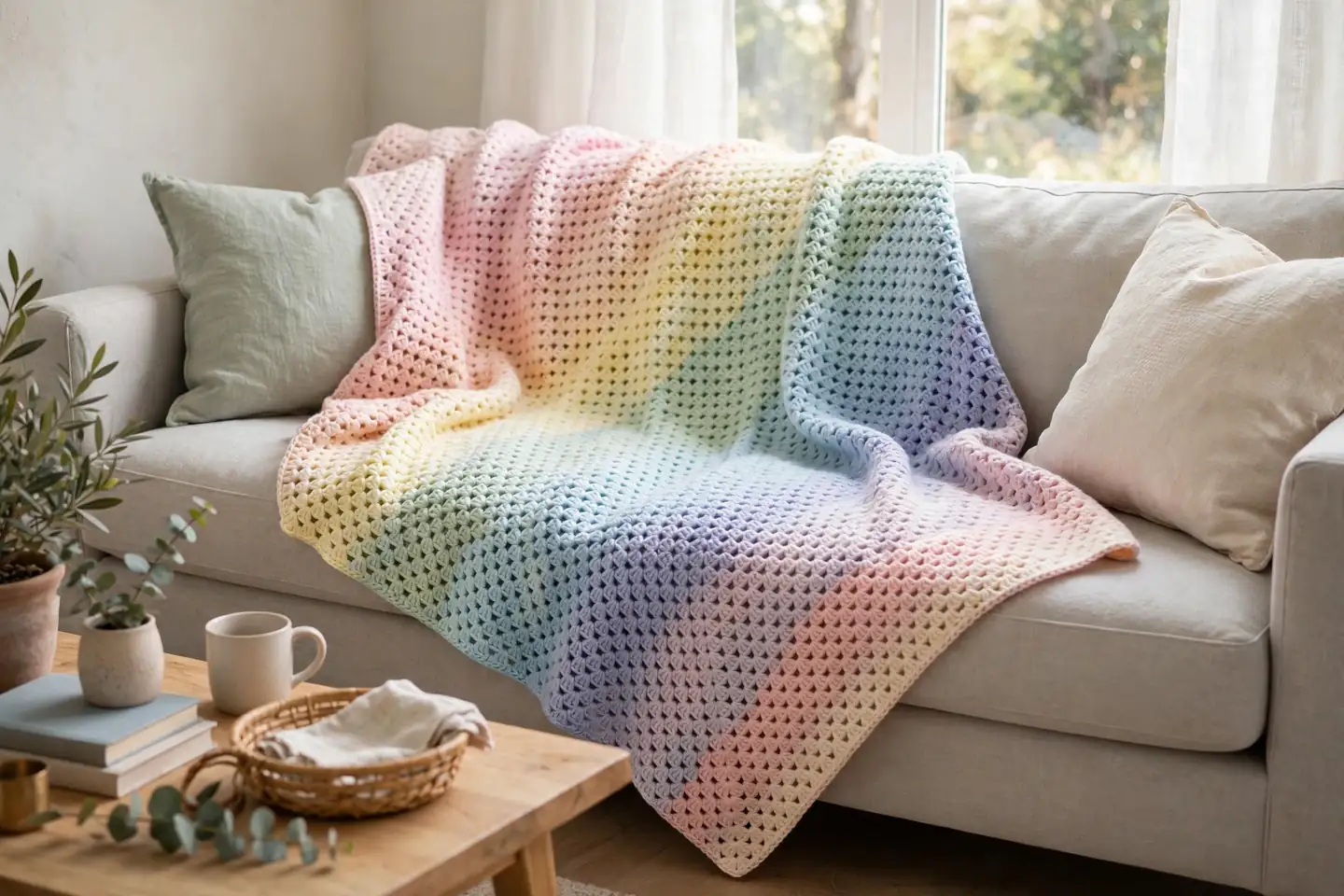
Soft pastel stripes in a slow color-changing yarn. No ends to weave — the yarn does the color work for you. Best with DK weight baby yarn and a 5.0 mm hook. Best for: a dreamy nursery blanket with almost no finishing.
7. Textured Shell-Edge C2C Blanket
A simple C2C center with a pretty shell border. The border hides any wobbly edges. Best with worsted weight soft acrylic and a 5.5 mm hook. Best for: a polished look even if your tension is still uneven.
8. Mint and Cream C2C Blanket
Two calm colors in wide stripes. Modern, simple, and gender-neutral. Best with anti-pilling acrylic and a 5.5 mm hook. Best for: a gift that suits any nursery.
9. Lacy C2C Baby Blanket
Chain spaces between blocks make an airy, lacy fabric. Lighter and faster than solid C2C. Best with fingering weight baby yarn and a 4.0 mm (G) hook. Best for: a delicate blanket that still works up quickly.
10. C2C Granny Stripe Blanket
Combines C2C blocks with classic granny stripes. Colorful and cheerful. Best with worsted weight acrylic in four or five colors and a 5.5 mm hook. Best for: using up your yarn stash.
Fun Graphgan and Picture Blankets
C2C is the best technique for pixel-style pictures. Each block is one pixel.
11. Heart Graphgan Blanket
A simple heart chart — your first picture blanket. The chart is small and easy to follow. Best with worsted weight yarn in two colors and a 5.5 mm hook. Best for: learning to read a C2C chart.
12. Striped Chevron C2C Throw
Bold zigzag stripes made by changing colors on a schedule. Looks complex, works simply. Best with worsted weight acrylic in three colors and a 5.5 mm hook. Best for: a statement throw for the couch.
13. Woodland Animal Graphgan
Fox, owl, or bear pixel charts sized for a baby blanket. Babies love the simple shapes. Best with DK weight yarn in four colors and a 5.0 mm hook. Best for: a nursery blanket with personality.
14. Holiday Tree C2C Blanket
A Christmas tree pixel design in greens with a star on top. Festive and fun to make. Best with worsted weight yarn in green, brown, and gold and a 5.5 mm hook. Best for: a holiday gift or decoration.
15. Name or Initial Graphgan
Chart out a letter or short name in blocks. The most personal gift you can crochet. Best with worsted weight yarn in two high-contrast colors and a 5.5 mm hook. Best for: a one-of-a-kind baby or wedding gift.
C2C Sizing Cheat Sheet
Each C2C block measures about 1 inch square in worsted weight yarn with a 5.5 mm hook. Count the blocks on one side:
– Lovey / stroller blanket: 25–30 blocks (about 25–30 inches) – Baby blanket: 35–40 blocks (about 35–40 inches) – Lap blanket / throw: 45–55 blocks (about 45–55 inches) – Twin bed blanket: 60–70 blocks (about 60–70 inches) – Queen bed blanket: 80–90 blocks (about 80–90 inches)
Your gauge may differ, so measure your first 6 blocks and do the math. If your blocks are smaller, add more blocks. If bigger, use fewer.
For more blanket ideas beyond C2C, browse our free crochet blanket patterns.
Frequently Asked Questions
Is corner to corner crochet easy for beginners? Yes. You only need chain, double crochet, and slip stitch. Most beginners finish a small C2C square in their first sitting. Start with a washcloth to learn the rhythm.
Why are my C2C edges curling? Tight tension is the usual cause. Relax your grip and try a larger hook. Blocking the finished blanket — pinning it flat and steaming it — also fixes mild curling.
How do I know when to start decreasing? Measure the long straight side of your triangle. When it equals the width you want, start decreasing. Keep measuring every few rows — C2C grows faster than you expect.
How much yarn does a C2C blanket need? A baby blanket needs about 1,000–1,500 yards of worsted weight. A throw needs 2,000–2,500 yards. Buy it all at once so the dye lots match.
Can I make a rectangle instead of a square? Yes. Increase until one side hits your width, then increase on one side only while decreasing on the other. This keeps the width fixed while the length grows. Then decrease both sides to finish.
Do I have to weave in all the ends? Every color change leaves a tail, but you can carry yarn up the side for stripes instead of cutting. For graphgans, weaving as you go keeps the job small. A yarn needle is your best friend.