Free Crochet Dishcloth Patterns: 9 Easy Ideas for Beginners
A dishcloth is the perfect first crochet project. It is small, quick, and useful. You can finish one in an evening and actually use it the next day.
I have rounded up 9 free crochet dishcloth patterns that are easy for beginners. Most use only basic stitches you already know. Pick one, grab some cotton yarn, and let us make something useful.
The Best Yarn for Crochet Dishcloths
Use 100% cotton yarn. Cotton soaks up water and dries well. Acrylic yarn feels plasticky and does not absorb spills. That makes it a poor choice for the kitchen.
Kitchen cotton is cheap and comes in many colors. Popular picks are Lily Sugar’n Cream, Knit Picks Dishie, and Peaches & Creme. Worsted weight (4) is the standard.
Why it matters: 100% cotton lasts longer in the wash. It also feels better in your hands when you scrub dishes.
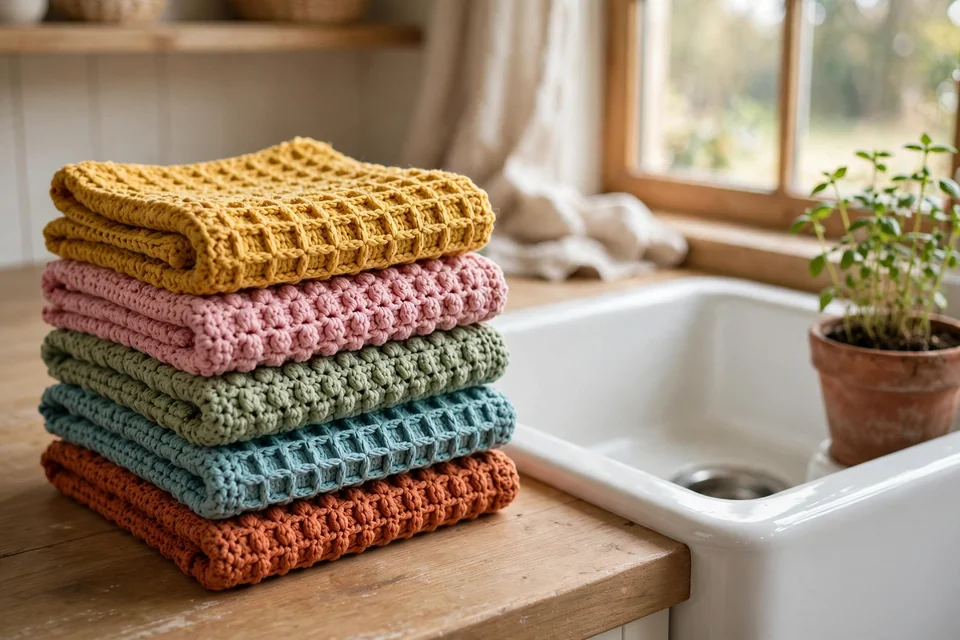
9 Free Crochet Dishcloth Patterns
1. Classic Single Crochet Dishcloth
The simplest one on the list. Chain about 30, then single crochet back and forth until the cloth is square. It is flat, sturdy, and great for wiping counters.
Good for: practicing even stitches and tension.
2. Lemon Peel Stitch Dishcloth
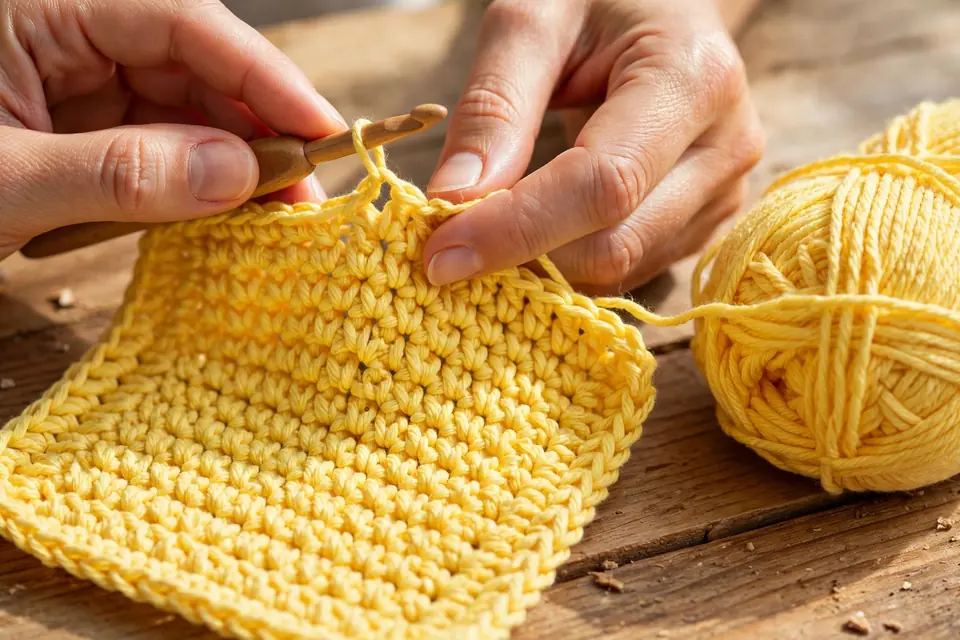
Alternate single crochet and double crochet across each row. This creates a lovely nubby texture that scrubs well. You need to know only two stitches.
Good for: beginners who want a pretty texture with no extra effort.
3. Half Double Crochet Dishcloth
Work half double crochet stitches in the back loop only. This adds stretch and a ribbed feel. It is a little softer in the hand than single crochet.
Good for: building speed with a slightly taller stitch.
4. Waffle Stitch Dishcloth
This one uses front post double crochet stitches to make a waffle pattern. The thick texture gives real scrubbing power for stuck-on food.
Good for: a heavy-duty kitchen cloth.
5. Moss Stitch Dishcloth
Also called the linen stitch. You work single crochet and chain stitches in a simple repeat. The fabric is dense with no big holes, so it works well for washing dishes.
Good for: a neat, modern look.
6. Granny Spike Dishcloth
A variation of the classic granny stitch with fewer gaps. It works up fast and looks charming in two or three colors.
Good for: using up leftover yarn.
7. Striped Dishcloth
Use two or three colors to make simple stripes. Just switch colors every few rows. Stripes hide small mistakes, so this is a confidence builder.
Good for: learning color changes.
8. Diagonal Dishcloth
Work from one corner to the opposite corner, increasing then decreasing. The diagonal rows look fancy, but the stitch is just single crochet.
Good for: a gift-worthy cloth that still takes one evening.
9. Textured Bobble Dishcloth
Add small bobbles for a scrubby surface. Place them a few stitches in from the edge so the edges stay straight.
Good for: practicing a new stitch on a small project.
What Size Should a Dishcloth Be?
The standard size is 8 x 8 inches. It fits nicely in one hand. For a bigger wiping cloth, go 10 x 10 inches.
One ball of worsted cotton yarn (about 85–90 yards) makes one 8-inch cloth. Keep this in mind if you want to make a matching set.
3 Mistakes Beginners Make (and How to Fix Them)
1. The edges curl up like a bowl
This happens when the starting chain is too tight. The rows have nowhere to expand, so the fabric cups upward.
Fix: make your foundation chain with a hook one size bigger. If the pattern says 5 mm, chain with 5.5 mm, then switch back to 5 mm for row 1.
2. The edges turn wavy or uneven
This is usually a stitch-count problem. One extra stitch here or there makes the sides grow.
Fix: count your stitches at the end of every row for the first few rows. Place a stitch marker in the first and last stitch so you always know where the row ends.
3. The cloth falls apart in the wash
Acrylic or novelty yarns do not hold up to hot water and scrubbing.
Fix: stick with 100% cotton. It gets softer and more absorbent with every wash.
How to Care for Crochet Dishcloths
Machine wash them with your towels in warm water. Toss them in the dryer or lay them flat to dry. Cotton dishcloths last for months of daily use. Replace them when the fabric gets thin.
A Quick Starter Pattern to Try Today
Want to make your first one right now? Here is a simple lemon peel dishcloth.
You need: worsted weight cotton yarn, 5 mm (H) hook, scissors, yarn needle.
Pattern:
- Row 1: Chain 31. Single crochet in the 2nd chain from the hook. Double crochet in the next chain. Keep alternating single and double crochet across. End with a double crochet.
- Row 2: Chain 1 and turn. Single crochet, then double crochet across, always ending with a double crochet.
- Rows 3–23: Repeat row 2.
- Cut the yarn, weave in the ends, and you are done.
That is the whole pattern. One stitch repeat, one evening, one useful cloth.
FAQ
What is the easiest stitch for a crochet dishcloth?
Single crochet is the easiest. If you want a little texture, try the lemon peel stitch. It is just single and double crochet alternating.
How much yarn do I need for a dishcloth?
About 85–90 yards of worsted weight cotton makes one 8 x 8 inch cloth. That is one standard ball.
Can I use acrylic yarn for a dishcloth?
You can, but it will not absorb water well. Cotton is the better choice for anything that touches dishes or spills.
Why are my dishcloth edges curling?
Your starting chain is probably too tight. Chain with a bigger hook, then switch to your pattern hook for the rest.
How long does it take to crochet a dishcloth?
Most beginners finish one in 1–2 hours. It is one of the fastest crochet projects you can make.
Happy crocheting! These small projects build real skill. And every kitchen needs a stack of fresh dishcloths.